The Spirituality of Stuttering
"We all have three voices: the one we think with, the one we speak with, and the one we write with. When you stutter, two of those are always at war." John Hendrickson
I don't personally deal with stuttering, but John's insight about our three voices hits on something any communicator knows well. When you have a microphone in your hand and your brain is moving quickly, it can sometimes be a challenge to keep those two voices properly in sync. As the writer Austin Kleon notes about the three voices:
These voices, if not warring, are always in a weird dance with each other. Even if you're fluent, your voice is constantly saying things that your thinking voice disagrees with and needs to correct.
It reminds me of Moses in the Old Testament. He's the most notable savior figure in that text, and yet we are told he specifically struggled with his voice. After God calls Moses to a unique assignment with Pharaoh himself, Moses responds by saying, "I have never been eloquent... I am slow of speech and slow of tongue" (Exodus 4:10). We can imagine how this struggle with his voice might make one hesitant to take on the man in charge of the most powerful empire of that time. Moses' speaking voice couldn't keep pace with his thinking voice.
One of the questions I'm sometimes asked is whether I like speaking or writing better. I like the immediate connection with others that speaking provides, but I like the precision of thought writing provides. Those two voices have different ways of carrying my thinking voice. And we could narrow that down even further. Writing on my laptop is a different experience from writing on one of my typewriters. When the distance between my voices feels within my control, it's a great feeling. Whenever one voice feels like it isn't playing nicely with the others, we've got a problem.
For Moses, this disparity between his voices created hesitation. Two other times, we find him asking God, "Why should Pharaoh listen to me?" (Exodus 6:12, 30). I know that feeling well, and I suspect you do too. When we focus on our limitations, we take ourselves out of the running. Why would anyone listen to me? Why would anyone care? Why would anyone notice? I find it fascinating that the text tells us in two different verses that Moses repeated the question. These types of challenges live rent-free in our heads.
Conversely, the artist Glen Baxter described how his stutter caused him to face his fears head-on.
You can’t ask the grocer ‘Can I have some oranges?’ because you’re going to immediately hit the word c-c-can, so you say, ‘Good morning, have you any oranges?’ Of course the shop’s full of oranges — who is this idiot? — so you’re in the position of being slightly mad and also there’s this fear involved.
He then concluded that "This childhood fear means I tinker with sentences until I've got them just about right." Navigating fear in this way led him to develop his unique artistic style.
People with a stutter have an intentional process for working through it. But this actually applies to all of us. I bet it isn't hard for you to think of a recent situation in which you said something you wish you hadn't said. Maybe it was a group text you thought was a private message. Or a private message you thought was a group text. The details vary. The regret is consistent. Either way, your voices were out of sync, and as you replayed it, you may have felt remorse, or confusion, or even humor if you were able to laugh it off.
I don't know about you, but I'm more drawn to how Glen Baxter approached his stutter than I am to how Moses handled it. Glen's approach is similar to what we find in the Apostle Paul and his own weaknesses. As Paul pleaded with Jesus to remove his weakness, Jesus responded, "My grace is all you need. My power works best in weakness" (2 Corinthians 12:9). If Paul was anything like me, that probably wasn't the answer he was looking for. Yet Paul found a way to lean into this reality.
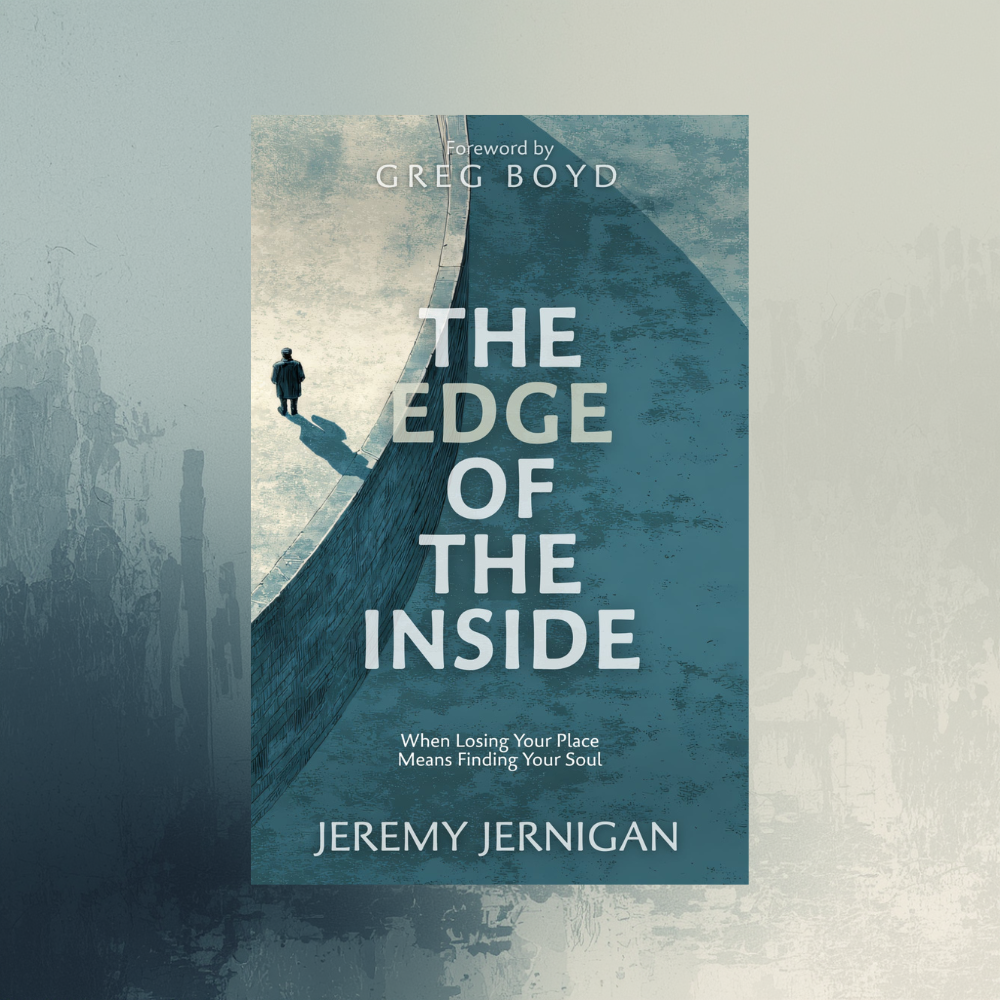
There's a question that keeps coming up in conversations about The Edge of the Inside: can someone choose to live on the edge, or does something have to push them there?
I wish we could choose it, but I suspect we often need something like a weakness or a traumatic event to serve as a catalyst. As I write in the book, "Sometimes, it takes something destructive to move us forward. We rarely walk away from the center by our own choice. We often have to be carried, dragged, or evicted. And only once we’re standing on the outside, dusting ourselves off, do we realize that maybe this is where we were meant to be all along."
Our weaknesses don't disqualify us from what we're called to do. They shape the method. Moses' limitation made him depend on Aaron. Baxter's limitation made him obsessive about precision. Paul's thorn made him less arrogant and dependent on something outside himself. What felt like my biggest career failure ended up leading me into a place I likely wouldn't have chosen, but now can't imagine anything else.
We read about Moses' stutter in Exodus, but by the time you finish the book of Deuteronomy, we see a different perspective:
There has never been another prophet in Israel like Moses, whom the Lord knew face to face. The Lord sent him to perform all the miraculous signs and wonders in the land of Egypt against Pharaoh, and all his servants, and his entire land. With mighty power, Moses performed terrifying acts in the sight of all Israel. (Deuteronomy 34:10-12)
One thing I hear more than anything else from people in this community: "I thought I was the only one." You're not. The online community is a private space for people rebuilding their faith outside the walls of institutional Christianity — guided book studies, live monthly calls, weekly behind-the-scenes content, and actual conversation with people who get it. Starts at $10/month. No pressure — but the door's open: Find out more.
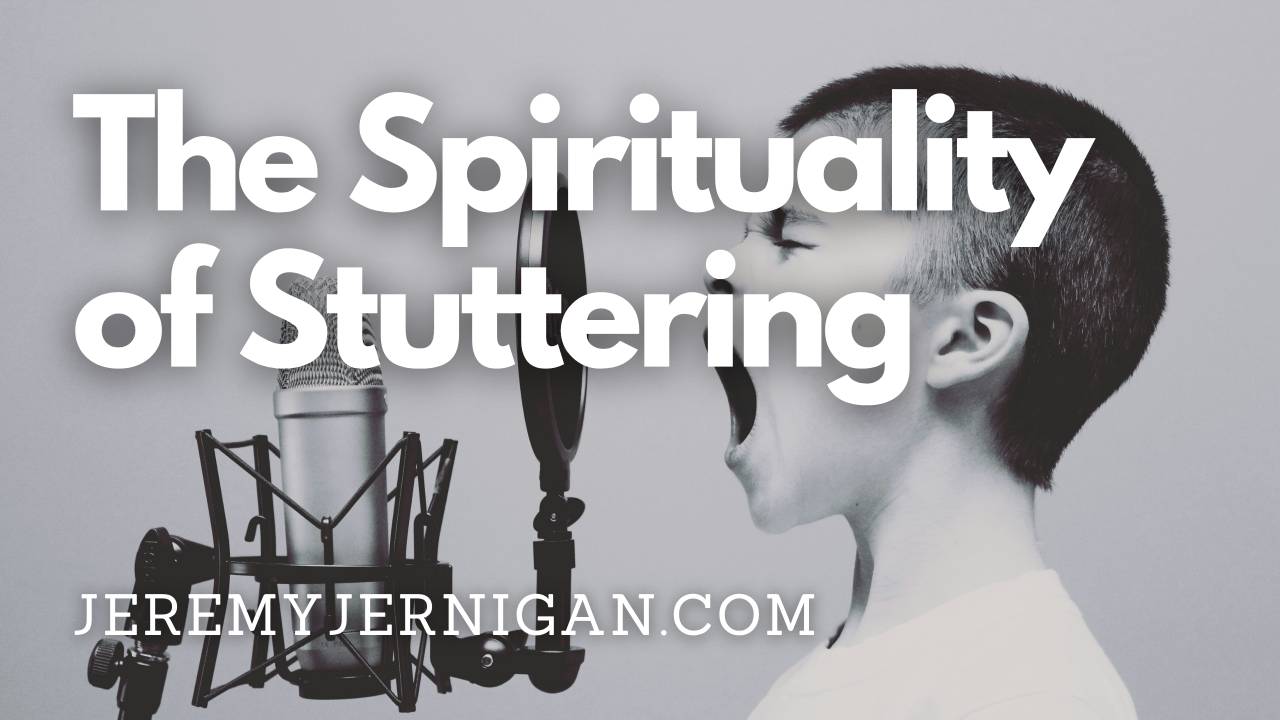
Photo by Jason Rosewell on Unsplash
Sign up with your email and never miss a post!
We hate SPAM. We will never sell your information, for any reason.