The Other 97

I grew up being told to fear the liberal agenda. The idea was that if I wasn't properly guarded, I would eventually become desensitized to homosexuality, or would wake up one day and realize I no longer had any morals. Whenever a TV show or movie would depict any type of queer affection, the reaction from Christians would usually be an exasperated demand for them to stop shoving 'their' beliefs down our throats.
And yet the irony is that from my vantage point, the people with the loudest (and most obnoxious) agenda are those who technically believe what I believe. Or at least, a version of it.
Back in 2009, I wrote a blog post about a term I had read about (I've been writing these posts for a very long time). The term was coined by the author Mike Bechtle and referred to "spam evangelism." Here was Mike's quote that stood out to me:
A college classmate decided to walk down Central Avenue in Phoenix at lunchtime and ask women to kiss him. He wanted to see how many people he would have to ask before someone took him up on it. After being repeatedly cursed and ignored, and slapped a couple of times, the 98th woman gave him a kiss. Using the logic of "spam evangelism," he might say, "It was worth it, because I actually got one person to kiss me." I wondered about the other 97 women who might be more hardened than ever, more suspicious, and more wary of men approaching them on the street. In the same way, I think a lot of unbelievers have been hardened by aggressive witnessing techniques.
Most of my career (and certainly the last six years) has been spent trying to apologize to the other 97 and show them that not all of us are like that. It feels a bit like arguing for "not all men," and I understand the caution people bring (I also understand why they choose the bear).
The impulse to tell people about Jesus is genuinely good, even commanded. Jesus proclaimed publicly. The early church did it. I make content trying to point people to the goodness of the Jesus I've experienced. But how we choose to do this sometimes communicates more than we realize about what we believe. While some of the strategies have changed since I first wrote about this in 2009, it does not seem that Christians have become any less obnoxious in our agendas.
As a case in point, the "sky evangelist" Whitney Lynn was recently banned from flying Alaska Air after deciding that an airplane full of people who can't go anywhere else is the perfect audience for her to preach to. No matter that they are not choosing to do this or consenting to have her morality preached to them. No matter that flight attendants asked her to stop and told her that "the crews don't feel safe with you."
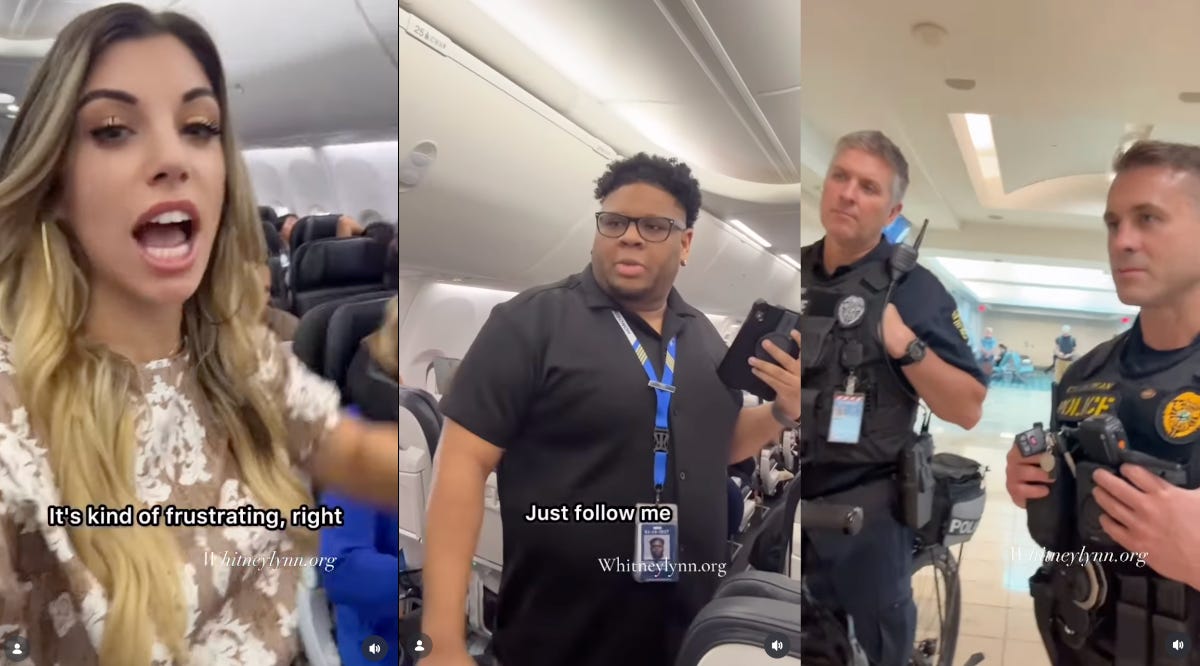
She posts all about her perceived victimhood on social media, and after this incident shared that "We are truly living in the last days. But here's the amazing part: God still moved. Two people gave their lives to Jesus!"
Personally, I heartily doubt that to be true. But for the sake of argument, let's assume she's right. What about all of the other passengers on the plane? What do they think about what Whitney believes now, especially after watching how she lives it out? They've just experienced an ugly version of Christianity that felt violating.
Whitney certainly gets the attention she craves from these behaviors. I'm reminded of Matthew 6:5: "When you pray, don’t be like the hypocrites who love to pray publicly on street corners and in the synagogues where everyone can see them. I tell you the truth, that is all the reward they will ever get." Whitney is certainly getting her reward now.
That's the beauty of spam evangelism: it allows you to take the moral high ground while feeling exactly none of the consequences of your actions. You can also attribute it to some kind of spiritual battle, with you as the good soldier showing up to do your part and any negative reactions you get are obviously reactions to the message, not the messenger.
Bad behaviors done in the name of God should make us suspicious of the theology that produced it. I cannot reconcile my understanding of Jesus with either of these examples. It simply does not look anything like Jesus to me. I am therefore less than interested in whatever beliefs they are trying to convince me of.
That's why I so appreciate that the Apostle Paul gave us tangible things to look for when we discern whether a person is following Jesus well. We know the list today as the fruit of the Spirit.
The Holy Spirit produces this kind of fruit in our lives: love, joy, peace, patience, kindness, goodness, faithfulness, gentleness, and self-control. (Galatians 5:22-23)
Fruit like this is public and observable. I don't see the fruit of the Spirit on display in the person stubbornly preaching at an enclosed grouping of people on a plane or a train who communicate a desire for them to stop. I see an agenda that should be fought against. There are loud versions of Christianity around us right now, and many of them are on the lips of politicians using these ideas to get people to go to war or to hate certain groups of people.
By contrast, we see others like Ms. Rachel being put on blast for their actions, even though I'd argue she exudes the fruit of the Spirit. She's using her platform as a creator of kids' content to champion vulnerable kids around the world.
When performative Christianity builds you a following and sacrificial Christianity brings you public condemnation, it's worth analyzing whether something is wrong with our beliefs. The reason why we find Christians displaying this kind of agenda is precisely because of the theology they have to make sense of God. If God really plans on allowing billions of people to burn for eternity and is fine to ignore people who don't fit with a certain lifestyle, then maybe those behaviors make sense. If we believe in a petty God, then petty performative displays make sense.
But if we believe something better, something that actually looks more like Jesus, then any need for an agenda goes away. We can work alongside anyone interested in creating a world where everyone can thrive, regardless of what they believe. There is no us-and-them, no finish line to cross or to get others to move past. No need to see every captive audience as a call to action. There is simply that which brings life, and that which robs it.
If this resonated, there's more where it came from. The online community is where I do this work every week alongside people rebuilding their faith on the outside of institutional Christianity — book studies, live calls, weekly newsletter, and honest conversation. Find out more.
Photo by Oxana Melis on Unsplash
Whitney photo credit: Friendly Atheist
Sign up with your email and never miss a post!
We hate SPAM. We will never sell your information, for any reason.