Who Created Hell? A Question for Anyone Who Wants a Good God and a Literal Hell

Many Christians want to maintain the necessity of hell while also separating God from any responsibility for it. This gives them a tool to motivate people through fear while avoiding the negativity such a fear-based tool would create.
This post isn't a deep dive into views of hell itself (I covered that in episode 43 of my podcast), but I want to show you how this connection doesn't work as well as many people assume.
Part one of the equation is to establish a motivating fear of hell that frames our actions.
This is the common part that you'll likely hear from most evangelical churches. It is up to us to save people from hell. Therefore, we must actively fight for them and against this threat. In more traditional spaces, you might get a hellfire-and-brimstone-style sermon, complete with spittle and righteous anger. Consider a famous passage from Jonathan Edwards' sermon, "Sinners in the Hands of an Angry God."
The God that holds you over the pit of Hell, much as one holds a spider, or some loathsome insect, over the fire, abhors you, and is dreadfully provoked; his wrath towards you burns like fire; he looks upon you as worthy of nothing else, but to be cast into the fire; he is of purer eyes than to bear to have you in his sight; you are ten thousand times so abominable in his eyes as the most hateful venomous serpent is in ours.
Ah shucks. What it is to be loved by God.
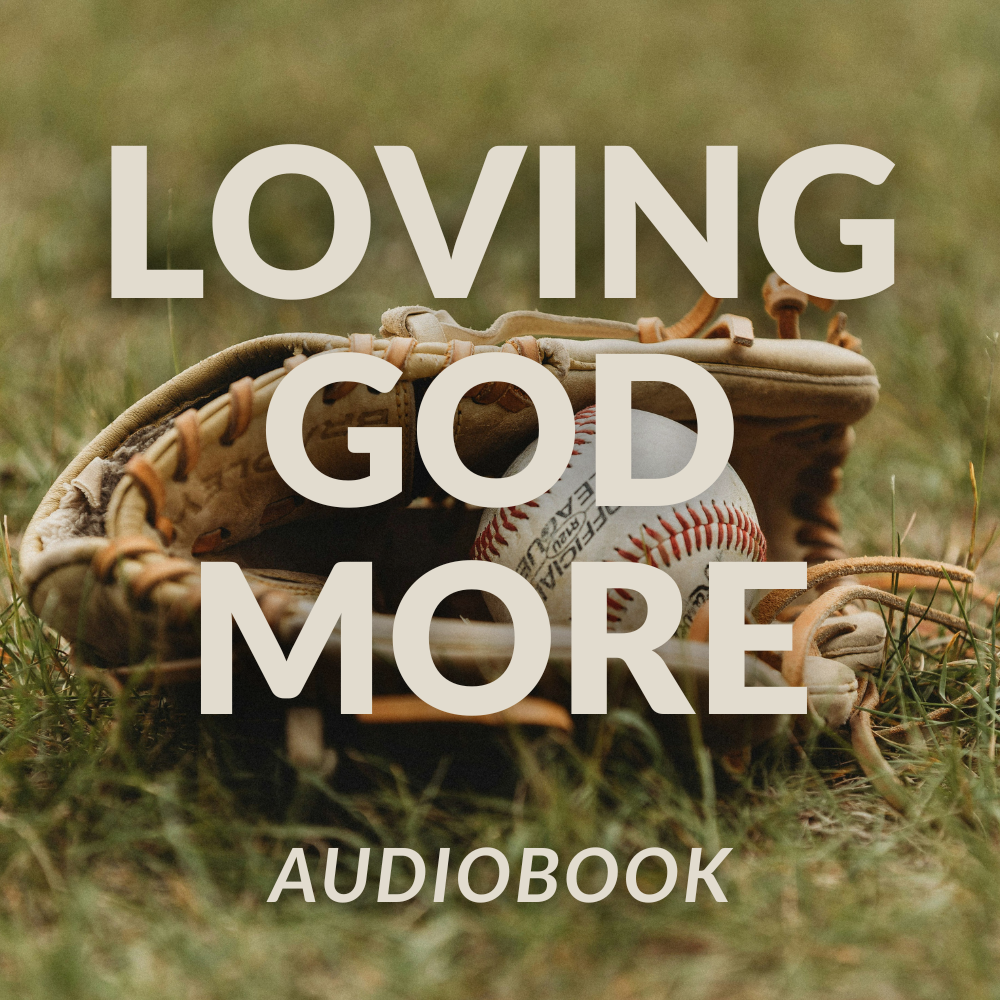
Thankfully, most preaching today is far less gross. We rightly sense a disparity in portraying God this way. And yet, the threat of hell still prevails. We keep it as a providential boogeyman to motivate people to follow God. We can explain our actions (especially those that may not be received well) as driven by a holy concern to keep people from hell. Part of the reason I wrote my short story Loving God More is that I watch so many parents choose this route with their kids.
Edwards credited God with the ugly parts, but Christians today have thrown that out while keeping the same concept of hell. The difference is we've now assigned the ugly parts to Satan.
In fact, we've become so confident in this explanation that we can sing songs celebrating that we aren't going to hell. You may have seen the following video posted online recently.
@thanostwerkwind #christiantiktok #christmas #cringe #exchristian #fypシ゚viral ♬ original sound - thanos twerk wind
Jingle bells, Jingle bells, I'm not going to hell.
This clip captures the logic: hell is bad, but God is good. Let's sing about it. It implies that one can conclude they are safely free of hell. But when we consider the theology of the people in this video, they are essentially dancing on the graves of everyone else who doesn't believe what they believe. The negativity is always there, even when we sing and dance about it.
Part two of the equation is to remove God from the negativity in part one.
We say things like, "God doesn't send anyone to hell; people choose it themselves," which I believed and taught for most of my life. In this way of thinking, God merely accommodates our free will and gives us options. Or, as C.S. Lewis argued in The Problem of Pain, "the doors of hell are locked on the inside." No one keeps us there but us. Lewis was trying to maintain God's justice in the face of this implied responsibility. While I'm grateful people try to maintain God's goodness and human dignity, I don't think it works.
I would offer a question for anyone who wants a good God and a literal hell:
Who created hell?
If there is a place of torment, especially one that lasts forever, who made it possible? Anyone operating in the equation I've laid out here will try to find an answer outside of God.
We might suggest that hell is merely the absence of God and was not created at all. Another analogy I've used over the years is that darkness is the absence of light, not a thing in itself. Perhaps hell works like that. But if there were a place without God, it would mean God made a space where God refuses to go. Or God set a boundary in creation that God intentionally does not cross. To stay within the metaphor, what could possibly block God's light forever? Either way, these explanations still connect it back to God. It also establishes a view of God that is no longer omnipresent. Who (or what) decides where God's presence will not be?
Or perhaps we'd argue that hell is run by Satan, so it's his creation. John Milton's Satan says it best, "Better to reign in Hell, than serve in Heav’n" (Paradise Lost, Book One). That raises all sorts of theological issues, since Scripture never gives evil the power to create. Creation is God's prerogative.
In addition, the Scriptures that are used to argue for a more literal view of hell often refer to evil being bound within it. Consider a few examples:
-
"Then I saw an angel coming down from heaven with the key to the bottomless pit and a heavy chain in his hand. He seized the dragon—that old serpent, who is the devil, Satan—and bound him in chains for a thousand years. The angel threw him into the bottomless pit, which he then shut and locked so Satan could not deceive the nations anymore until the thousand years were finished." (Revelation 20:1-3 NLT)
-
"For God did not spare even the angels who sinned. He threw them into hell, in gloomy pits of darkness, where they are being held until the day of judgment." (2 Peter 2:4 NLT)
-
"And I remind you of the angels who did not stay within the limits of authority God gave them but left the place where they belonged. God has kept them securely chained in prisons of darkness, waiting for the great day of judgment." (Jude 6 NLT)
Notice who is doing the binding? God is the jailer. And if God is the jailer of fallen angels, then God is the jailer of anyone else there too. Which means we're back to God creating a place to bind evil. This requires one to imagine a Jesus-looking God chaining and tormenting people for eternity.
The shocking reality many Christians miss is that Satan doesn't run hell; God does. Edwards' view of God was revolting, but it was logically more consistent.
As I've written about recently, we are caught up in a grand story of redemption. However we make sense of hell must fit into that. If we plan on believing in a literal hell, we won't be able to neatly separate it from God.
But that realization doesn't stir people to sing and dance.
If you found your way to this post, you probably already know you need more than a Sunday morning and a podcast. The Rebuilding Faith community is a private space where people like you meet online, read together, and don't have to pretend. You get the Friday Recap newsletter, monthly live calls, guided book studies, and more resources. Starting at $10/month. No long-term commitment. Come find out you're not alone: Find out more.
Photo by Nik Schmidt on Unsplash
Sign up with your email and never miss a post!
We hate SPAM. We will never sell your information, for any reason.